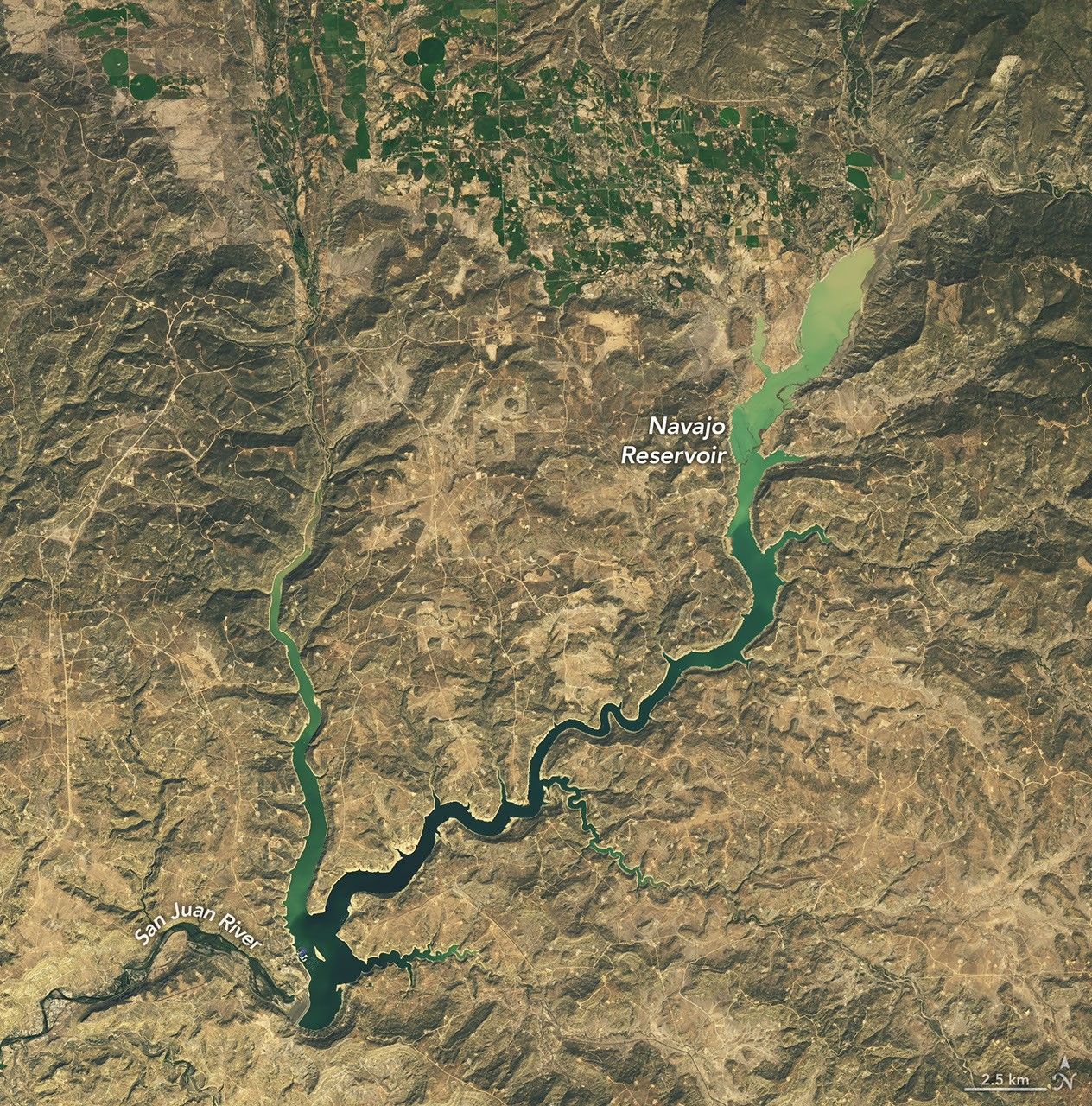
Back-to-back storms lift Navajo Reservoir nearly 60 feet in under two months
Back-to-back storms raised Navajo Reservoir by nearly 60 feet in under two months, lifting it from 60% to 108% of average capacity. The surge ended short-term drought in the Southwest and Great Basin but caused severe flooding in Four Corners communities. It shows how quickly water scarcity and flood risk can alternate in a drought-prone region.
NASA Earth Observatory said Landsat 9 images acquired on September 20 and November 7 showed a rapid expansion of the lake straddling northern New Mexico and southern Colorado. The reservoir, New Mexico's second-largest, had held just 60 percent of its average capacity on September 20. By November 7 it stood at 108 percent of average capacity and its highest level since August 2019, after storms flooded rivers and overwhelmed communities in the Four Corners region.
Corps data recorded the nearly 60-foot rise between two Landsat dates, while reduced Navajo Dam releases on September 16 and 17 pointed to rainfall and runoff as the main driver. The evidence is observational, using two satellite dates and water-level records, with the key limitation that it documents the surge rather than a longer trend. The wet spell delivered 2 to 4 times average precipitation from early September through early November across the Four Corners. At Pagosa Springs, Colorado, the San Juan River reached major flood stage on October 23 and nearly matched its 1911 record on November 1.
The surge illustrates how short-term storms can swing water systems from scarcity to flood risk in a drought-prone region. Winter 2025-26 snow drought limited spring snowmelt, leaving reservoirs low before autumn rain. Experts linked the unusually low-latitude low-pressure system to El Nino conditions and unusually warm ocean temperatures, which can steer moisture into the Southwest interior. The U.S. Drought Monitor reported that short-term drought had ended in the Southwest and Great Basin by November 3, but long-term drought persisted in places.
For towns along the San Juan, Piedra and other rivers, the same rain that ended short-term drought also damaged streets and property and forced evacuations and rescues. The rapid reservoir rise gives water managers more storage after a weak snowpack, while the flooding shows how quickly the Four Corners can shift from drought relief to disaster response. The Landsat comparison makes the shift visible: a landscape that looked dry in September was swollen by November.
The storms affect towns, farmers, water managers and flood responders across the Four Corners by ending short-term drought while causing property damage, evacuations and new storage at Navajo Reservoir.
Sources (1)
- [1]NASA Earth Observatory(https://science.nasa.gov/earth/earth-observatory/water-surges-into-navajo-reservoir/)