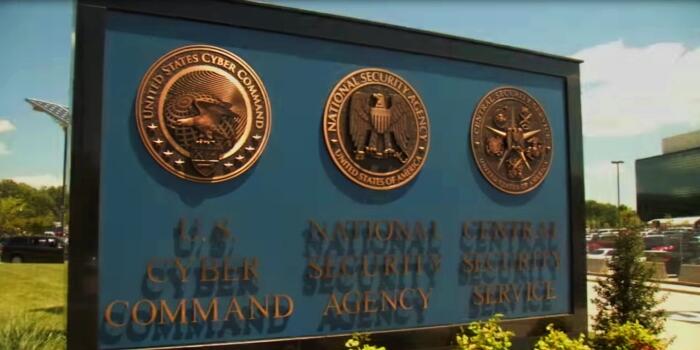
At least 11 NSA and Cyber Command workers died by suicide in the year ending September, prompting closed-door inquiries
Bloomberg and local reporting document at least 11 suicides among NSA and Cyber Command workers in a year, including a summer cluster, and closed-door questions from Congress and the White House. Leaders cite mixed personal causes and have limited hours and sought cleared mental-health funding; a causal link to mass surveillance itself is not established.
Documented: At least 11 people working for the National Security Agency or U.S. Cyber Command died by suicide in the 12 months ending in September, according to U.S. officials and public records reported by Bloomberg’s Jake Bleiberg and republished by The Japan Times. Ten of the deaths were near Fort Meade, Maryland, and one near an NSA facility in Georgia. The tally includes military personnel, civilians, and contractors. Five deaths between early June and early July were treated by the military as a suicide cluster, a concentration first reported by Bloomberg in August and followed locally by The Baltimore Banner. Further deaths in September included a 21-year-old Army soldier and a 59-year-old NSA civilian, according to death records and an official familiar with their employment.
The count has not been published as an official agency statistic. A Pentagon spokesperson told Bloomberg the military releases suicide figures by service, not by command or agency, so the 11 cannot be compared cleanly with prior years at these organizations. In 2024 the Pentagon recorded more than 23 suicides per 100,000 service members—nearly twice the rate for the U.S. population—with four deaths coded to “cyberspace operations” and 14 to “signal intelligence/electronic warfare” across the force. How those occupational codes map onto NSA and Cyber Command personnel is not clear.
What officials have said, and what they have not: Agency leaders told lawmakers that the evidence so far points to distinctive, complex circumstances, including personal and financial problems, and that no single explanation has been established. Commanders have still treated the pattern as an operational problem. Gen. Joshua Rudd, who leads both NSA and Cyber Command, has required eight uninterrupted hours of rest daily and restricted shifts longer than 12 consecutive hours without authorization. The agencies expanded shared healthcare access and added clinical and spiritual support. In April, Rudd requested $11 million for psychological support for cyber operators, warning that without it burnout and force degradation would increase. Maryland lawmakers, including Rep. Sarah Elfreth and Sens. Chris Van Hollen and Angela Alsobrooks, have pressed for that funding and for briefings. An October letter from Maryland members urged appropriators to preserve money for embedded support teams, on the ground that classified workplaces make it harder to reach clinicians who hold the right clearances.
Claimed, not proven as a general cause: Families and colleagues describe a workplace that is hard to leave at the door. Technical Sgt. Kevin Stallings, 36, an Air Force intelligence analyst at Cyber Command, died on June 22. His family told Bloomberg that he left work early on June 17, missed work the next day, and that police were not called until the afternoon of June 22. Air Force officials did not answer Bloomberg’s questions about those days. In a final message viewed by Bloomberg, Stallings referenced debt, the end of his marriage, an earlier suicide in his unit, and the death of his dog, and wrote that commanders could not have prevented his death. His father has said he believes the war with Iran and work his son did not want to do affected his mental health; the father also said he did not know what the job entailed. Kevin Paulson, 40, an NSA cyberspace effects operations officer and Maryland Air National Guard cyber operator, died on July 6. His sister told The Baltimore Banner he sometimes worked shifts of up to 16 hours, was depressed and sleeping poorly, and that his career was his whole life. Former intelligence executive Harry Coker Jr. told Bloomberg the pace at NSA and Cyber Command can be overwhelming, and that cyber work is not “away from the front” intellectually or emotionally even when it is physically distant.
The structural constraint that reporting keeps returning to is not a published suicide rate unique to signals intelligence. It is secrecy as a barrier to care. Work happens in windowless SCIFs, often without personal devices and with restricted contact with family, The Baltimore Banner reported. Cybersecurity professional and Army veteran Ryan Shaban told the Banner that people in the field often do not report mental-health problems because they fear losing a clearance, and that he has lost multiple friends in cyber and national security to suicide. Elfreth told Bloomberg that electronic warfare’s effect on mental health is poorly understood relative to conventional warfare. A prior NDAA-directed look at Cyber Command workforce resources found them inadequate, according to the Banner. Fort Meade has added kiosks, workshops, and a limited program of licensed clinicians at Kimbrough Ambulatory Care Center; those steps are documented responses, not evidence that the underlying access problem is solved. Elfreth has also noted that the Defense Department’s definition of a suicide cluster covers military personnel, so a mixed cluster of civilians and service members was not automatically flagged to Congress.
Speculated, and not established by the reporting: that these deaths are caused by participation in mass surveillance, or that they reveal a single “psychological toll of the surveillance state.” The public record supports a narrower claim. People who spy on and hack foreign networks, under wartime tempo and increasingly capable AI tools, are dying by suicide at a pace that surprised their own leadership, while the secrecy required for the work also obstructs ordinary mental-health care and ordinary public accounting. Officials have explicitly declined to assign one cause. Individual notes and family accounts include debt, relationships, grief, and fear of losing the job—factors that appear across suicides outside intelligence work. What is distinctive, on the evidence so far, is the combination of surge workload, isolation inside classified spaces, and a clearance system that can punish disclosure.
The documented deaths affect military, civilian, and contract staff at Fort Meade and their families, and they have already changed shift rules and funding requests for cleared care. Secrecy makes both the toll and access to help harder to measure than in the rest of the force.
Sources (4)
- [1]More Suicides at Spy, Cyber Agencies Scrutinized by Congress(https://www.bloomberg.com/news/articles/2026-11-10/more-suicides-at-spy-cyber-agencies-scrutinized-by-congress)
- [2]More suicides at U.S. spy and cyber agencies scrutinized by Congress(https://www.japantimes.co.jp/news/2026/11/11/world/politics/suicides-spy-cyber-agencies-congress/)
- [3]America’s Cyber Forces Grapple With Cluster of Deaths by Suicide(https://www.bloomberg.com/news/articles/2026-08-06/us-military-s-cyber-command-unit-grapples-with-cluster-of-deaths-by-suicide)
- [4]Cluster of 5 suicides at Fort Meade’s Cyber Command raises questions(https://www.thebanner.com/community/local-news/fort-meade-cyber-command-suicides-RC6YIRJO6ZBFVHAPAF62ZDIU3M/)